
What Institutions Need from an OTC Execution Platform
A single counterparty can simplify access to fragmented liquidity. The platform still needs to bring pricing, execution, settlement, and reporting into one clear workflow.
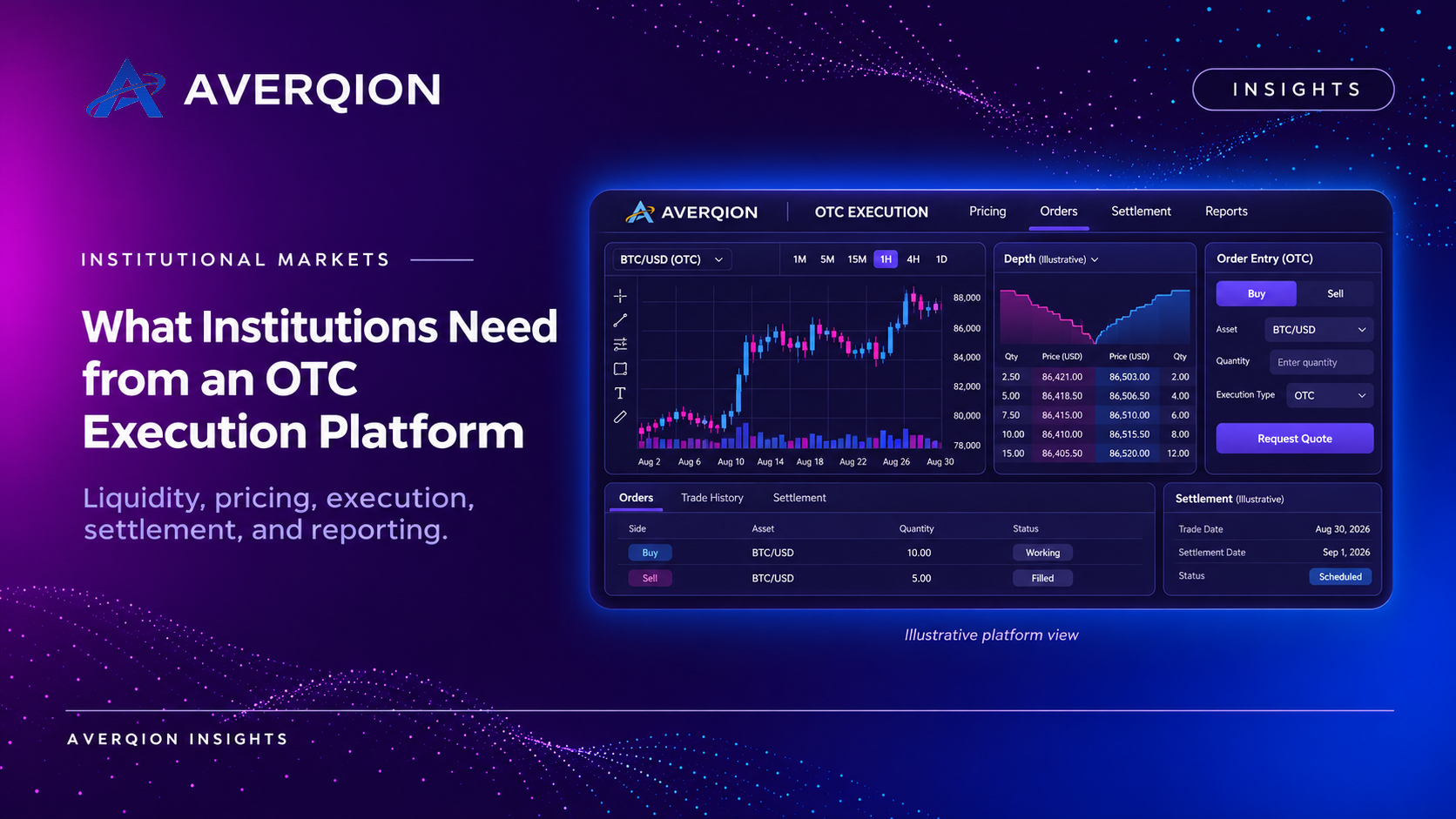
For an institutional desk, access to digital asset markets is only useful when the entire trade can be managed with clarity—from the first price request to the final settlement record.
Digital asset liquidity is distributed across exchanges, OTC desks, and decentralized venues. Each source has its own market depth, trading conventions, and operational requirements. Bringing those sources into view is valuable, but it does not, by itself, give an institution a reliable way to execute.
The practical challenge starts with an order. Its size, urgency, price constraints, and settlement requirements determine what the desk needs from the market. A platform should help translate those instructions into an executable trade without leaving traders and operations teams to reconcile separate systems by hand.
A single counterparty can reduce the number of relationships an institution has to manage. That simplification matters most when it carries through the whole process: understandable prices, clear order instructions, visible execution progress, agreed settlement arrangements, and records that can be checked after the trade.
Built around the institutional trading workflow
An execution platform earns its place on a desk by making trading decisions easier to act on. That begins with the distinction between a displayed market price and a price that is available for a particular order. The asset, size, validity period, and conditions of a quote should be clear before it is accepted.
The tightest spread on a screen is not always the best indication of the eventual result. Available depth, timing, market impact, and the ability to complete the full order all matter. Institutions need enough information to understand what is executable now and how a change in size or urgency could affect the outcome.
Order handling should reflect those differences. A request for quote can suit a desk seeking a firm price for a specified size. Limit and market orders answer different instructions. Scheduled methods, including TWAP or VWAP where supported, can help organize execution over time. Each method should have an explicit purpose, with its constraints and cancellation behavior understood before use.
For teams connecting through an API, the same clarity is needed in a different form. Acknowledgments, order identifiers, status updates, and error messages should be consistent with the interface used by the trading desk. The institution should be able to determine whether an order was accepted, partially filled, completed, or rejected without making assumptions from an interrupted connection.
The infrastructure beyond execution
A completed fill is an important milestone, but it is not the end of the workflow. The trade still has to be confirmed, reconciled, and settled. The platform should connect those steps to the original instruction so that the trading, treasury, and operations teams work from the same record.
Settlement terms need to be established before a trade is placed. The asset and currency being delivered, settlement timing, approved destinations, funding requirements, and responsibility for exceptions should be explicit. Where alternative arrangements are offered, their conditions should be agreed rather than inferred from the trading interface.
Control over access is equally practical. Traders, approvers, administrators, and operations staff may need different permissions. Institutions should be able to assess how a platform manages authentication, account changes, order authority, and sensitive settlement instructions, together with the records retained when those actions occur.
Reporting brings these controls into daily use. A useful trade record connects the requested order to its fills, prices, timestamps, costs, and settlement status. It should support reconciliation and execution review without requiring teams to reconstruct the sequence from messages or screenshots.
Support also belongs in the operating model. Before relying on a platform, a desk needs a clear escalation route for a delayed acknowledgment, an unexpected fill, or a settlement discrepancy. Coverage, response expectations, and the information required to investigate an issue should be understood in advance.
A more complete view of liquidity
Liquidity is more than the number of venues connected to a platform. What matters to an institution is whether the available liquidity can support its intended trade under the conditions that apply at that moment. A broad market view helps only if it leads to a usable price and a dependable execution process.
This becomes more apparent as an order moves beyond the most actively traded assets or grows relative to available depth. A desk may need to balance immediacy against market impact, divide an order into smaller intervals, or discuss a more tailored approach. The workflow should preserve the original instructions while making the consequences of those choices visible.
There is an operational dimension as well. Working with one counterparty can simplify access to several sources of liquidity, but the institution still needs to understand the terms of that relationship. Credit arrangements, execution responsibilities, settlement obligations, and reporting should be evaluated together.
The strongest platform assessment therefore follows an order from beginning to end. Can the desk understand the price, select an appropriate method, monitor progress, confirm the result, and reconcile settlement? Can the supporting teams see what they need without losing control over what they are permitted to do?
Those questions connect technology to the work it is supposed to support. A coherent OTC workflow makes the trade easier to manage at every stage, while leaving the institution with a clear account of what happened and why.
About MOCERION
MOCERION focuses on the trading, liquidity, and technology questions that shape digital asset markets. Our Insights series examines how market structure and operational decisions affect the way institutions approach execution.
For a closer look at the path from an initial quote to a completed trade, read From Quote to Fill: Inside an Institutional Crypto Trade. To discuss your execution requirements, connect with our team.
For informational purposes. The platform view is illustrative; execution methods and settlement arrangements depend on the provider, the asset, and agreed terms.